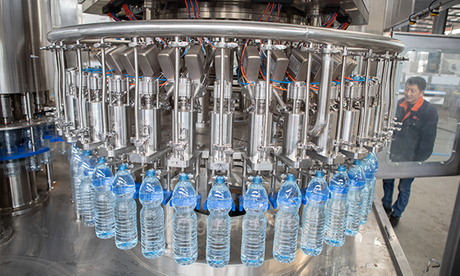
The growing interest in integrated blow-fill-cap equipment reflects a practical production challenge: PET beverage plants must manage output, hygiene, space, utilities, and labor without adding unnecessary complexity between core stages. Combiblock Machines respond by bringing bottle blowing, filling, and capping into a connected platform. The trend is not driven by fashion alone. It follows from a change in how producers evaluate a line—less as a collection of isolated machines and more as a controlled route from preform to finished bottle. Still, integration has conditions and trade-offs that deserve careful review.
Key Takeaways
- Combiblock interest is tied to the need for shorter bottle paths, compact layouts, and connected control of core PET bottling stages.
- Integration can reduce handling interfaces, but it also makes process planning and maintenance coordination more important.
- The best use case is defined by the beverage, bottle, cap, output target, site layout, and operating model—not by an industry trend alone.
- A project should evaluate the complete production line from preforms through final packaging before selecting a configuration.
Why integrated PET bottling is attracting attention
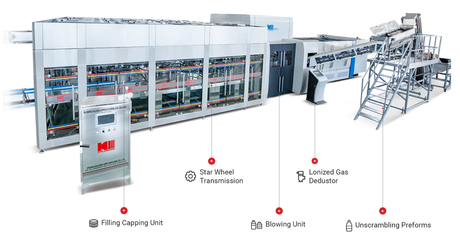
In an expanded traditional layout, a newly blown empty bottle may travel through conveyors and transfers before it is filled and capped. Each transfer requires mechanical alignment, controls, cleaning attention, and troubleshooting. A blowing-filling-capping machine reduces that path by coordinating the core operations in one physical and control architecture. The change is especially relevant where a plant wants a compact bottling line and a simpler central flow.
King Machine Co., Ltd. lists a blowing-filling-capping machine for PET bottles and beverage production. This kind of arrangement is a logical consideration for a new PET line or an expansion where the bottle-forming and filling steps are being defined together. It should not be treated as a drop-in answer before the product process and site interfaces are known.

The market trend therefore has two sides. Producers see an opportunity to reduce the complexity of empty-bottle handling. At the same time, manufacturers and buyers must design a more closely coupled machine sequence. The successful projects are those that acknowledge both sides at the outset.
The production pressures behind the trend
Space and flow constraints
New and expanding plants rarely have unlimited room. Long conveyor routes occupy space, complicate access, and require support systems that must be cleaned and maintained. An integrated filling line can make the core production area more compact. But the layout must still accommodate preform supply, cap supply, service access, electrical cabinets, air and water connections, drainage, quality checks, labeling, packing, and safe operator movement.
Demand for predictable quality control
Fewer empty-bottle transfers can mean fewer places for unstable handling to develop before filling. This may make the process easier to observe as a sequence. Yet quality control still depends on appropriate product handling, sanitation, closure performance, inspection, and disciplined operating procedures. A combiblock supports a controlled path; it does not remove the need for a plant quality system.
Need to manage whole-line operating cost
Capital cost is only one part of a beverage project. Plant managers also consider utilities, maintenance work, spare parts, lost production time, cleaning, labor allocation, and the cost of a poor layout. Combiblock Machines can change the balance of these items by reducing some transfer equipment and concentrating other functions in one unit. The exact effect must be modeled against the proposed line, not assumed from a generic market claim.
Integration brings trade-offs as well as benefits
| Potential advantage | Associated responsibility | Buyer response |
|---|---|---|
| Shorter empty-bottle route | Blowing and filling must be well synchronized. | Validate bottle stability, transfer behavior, and operating settings. |
| Compact central layout | Service access can become constrained if the site plan is rushed. | Review maintenance clearances and utility connections in the layout. |
| Connected controls | One stage can affect the availability of the others. | Define alarms, recovery steps, operator roles, and preventive maintenance. |
| Fewer standalone interfaces | Project scope boundaries can be overlooked. | Map every upstream and downstream connection before purchase. |
| Integrated process concept | Product-specific needs may require different process choices. | Specify beverage, bottle, cap, cleaning, and utility conditions early. |
This balanced view is useful during procurement. An integrated machine can simplify the core bottle route while increasing the importance of the service plan. It can reduce some conveyors while making site engineering more consequential. It can centralize controls while requiring operators to understand the sequence rather than one isolated module. None of these trade-offs are reasons to avoid the technology; they are reasons to prepare the project properly.
Which applications make the trend relevant?
Integrated blowing, filling, and capping is most relevant for PET beverage applications in which the bottle is made on site and the intended production process benefits from a direct route to filling. Bottled water is a common context, but beverage categories should be assessed separately. Juice and tea drinks may call for different filling and cleaning considerations, while carbonated beverages require their own process review. The line should be specified by what it must produce, not by copying a configuration designed for another beverage.
Format strategy also matters. A plant focused on sustained runs of a defined bottle family may value the repeatability of a well-set integrated platform. A plant that changes packages constantly may prioritize changeover planning, tooling, recipes, and verification steps. In both cases, the manufacturer needs detailed package information before the project scope is fixed.
King Machine can be part of the discussion for PET beverage packaging machinery, but the useful decision point comes after the buyer has shared the project facts. Those facts include product, bottle and preform, cap, output target, utilities, layout, operating schedule, and downstream packaging plan. They turn a broad trend into a technical specification.
How to evaluate an integrated filling line without following hype
Begin by mapping the desired production flow: preforms in, finished capped bottles out, then inspection, labeling, packing, and palletizing. Mark every utility and control interface. Next, list the losses that matter in the current or proposed operation: bottle handling faults, changeover delays, cleaning time, cap-related stops, downstream blockage, and utility interruptions. This turns an abstract efficiency conversation into measurable operating questions.
Then request a proposal that states assumptions rather than hiding them. The supplier should identify the intended bottle range, beverage process, target output conditions, included systems, excluded items, and maintenance requirements. Ask how start-up, normal running, a short stop, a product stop, cleaning, and recovery will be managed. Good answers describe the operating sequence, not just the machine’s appearance.
Finally, evaluate the downstream line. A fast core block that is repeatedly blocked by inspection or packaging cannot deliver its potential. Match conveyor strategy, accumulation where appropriate, inspection capability, labeler and packer capacity, and operator access to the expected production flow. The trend toward integration produces the best results when the rest of the line is designed to support it.
Turn the trend into a practical implementation plan
Before ordering, define an implementation sequence that starts with engineering rather than delivery. Confirm the layout and service clearances, utility routes, floor and drainage conditions, material supply path, and interfaces to existing or new equipment. Identify the long-lead decisions that can delay the project, such as final bottle and cap specifications, electrical standards, product-process confirmation, or building modifications. A schedule that only tracks the machine shipment date does not show whether the plant will be ready to receive and commission it.
During installation, protect the connection between mechanical setup and operating readiness. Equipment alignment, piping, electrical work, control signals, and safety devices should be checked systematically. The first dry tests should confirm motion and interlocks before the project moves into product trials. Once bottles, caps, and product are introduced, increase complexity in steps: prove bottle formation, then transfer behavior, then filling, then capping, and finally the downstream connections. Each step needs defined observations and a record of changes.
Training should follow the real operating sequence. Operators need to understand normal start-up, stopping, cleaning, format verification, alarm recognition, and safe recovery. Maintenance teams need to understand access, inspection points, lubrication or service instructions where applicable, and the boundary between operator checks and maintenance work. Quality staff need a clear plan for examining bottles and closures during trials. Training is most useful when it happens alongside the exact formats and procedures the plant will use, rather than as a generic presentation.
After handover, use a stabilization period to review actual performance. Track output, short stops, rejects, utility interruptions, cleaning time, and difficulties at the downstream interfaces. Agree on how observations will be documented and how settings are approved. This transforms a new combiblock from a completed installation into a managed production asset. It is also the best way to ensure that the integrated design delivers a durable operational benefit rather than a short-lived demonstration result.
Communication during this period should be based on concrete operating evidence. Instead of describing a line as simply “unstable,” record the stage, format, conditions, sequence, and result of each event. That level of detail helps both the plant and the equipment provider decide whether the answer is an operating adjustment, material check, maintenance action, utility correction, or design clarification.
Keep the improvement work focused. A new line can generate many suggestions during its first weeks, but not every suggestion should become an immediate alteration. Prioritize items that affect safety, product quality, repeatable operation, or significant production loss; then test changes through a documented process. This protects the stable operating baseline while allowing the line to improve in a controlled way.
Review the project against the original objectives after the line has experienced normal production, cleaning, and format changes. Compare the actual operating flow with the layout and process assumptions used during selection. This review helps the plant decide which lessons should be incorporated into training, maintenance routines, spare-parts planning, and any later expansion of the beverage packaging operation.
That review should be practical rather than promotional. Identify what reduced handling complexity, what still causes stops, and where the next improvement should sit. The answers will vary by plant, yet the exercise ensures that an industry trend is judged by its contribution to the beverage producer’s actual operations.
Over time, this operating record also supports better decisions about future formats and capacity. It gives the plant evidence about the limits of its current configuration, the condition of the supporting systems, and the areas where an expansion would need additional engineering.
In this way, the value of integration is continuously tested against real production needs rather than assumed from the equipment category alone.
Conclusion
Combi-block blowing-filling-capping equipment is becoming a prominent choice because it offers a more direct way to manage the core path of PET beverage production. Its appeal comes from practical pressures—space, empty-bottle handling, control coordination, and whole-line efficiency—not from a one-size-fits-all promise. Combiblock Machines deserve serious consideration when the beverage process, packaging, utilities, layout, and service model all support integration. The sound decision is to define those conditions first, then assess the equipment as part of a complete, maintainable line.
FAQs
Why are Combiblock Machines becoming more common in PET bottling?
They can combine bottle blowing, filling, and capping into a connected production path, reducing empty-bottle transfers and supporting a compact central layout.
Does an integrated machine reduce the need for operators?
It changes the work rather than removing it. Operators still supervise start-up, product conditions, alarms, quality checks, cleaning, changeovers, and recovery procedures.
What is the biggest risk of choosing a combiblock too quickly?
The main risk is selecting a generic configuration without defining the beverage, bottle, cap, utilities, site, and downstream packaging interfaces. This can leave critical assumptions unresolved.
Can an integrated filling line work with several bottle formats?
It can, provided the configuration and changeover plan support the intended formats. Confirm required parts, settings, procedures, and validation steps during the selection stage.
What should be included in a complete line review?
Review preform supply, blowing, filling, capping, utilities, cleaning, inspection, conveyors, labeling, packaging, service access, safety, controls, spare parts, and commissioning responsibilities.